
SQTE · Research project · FWF · 2019–2023
School Quality and Teacher Education
What highly effective schools in challenging circumstances in England do differently — and what Austria can learn from them
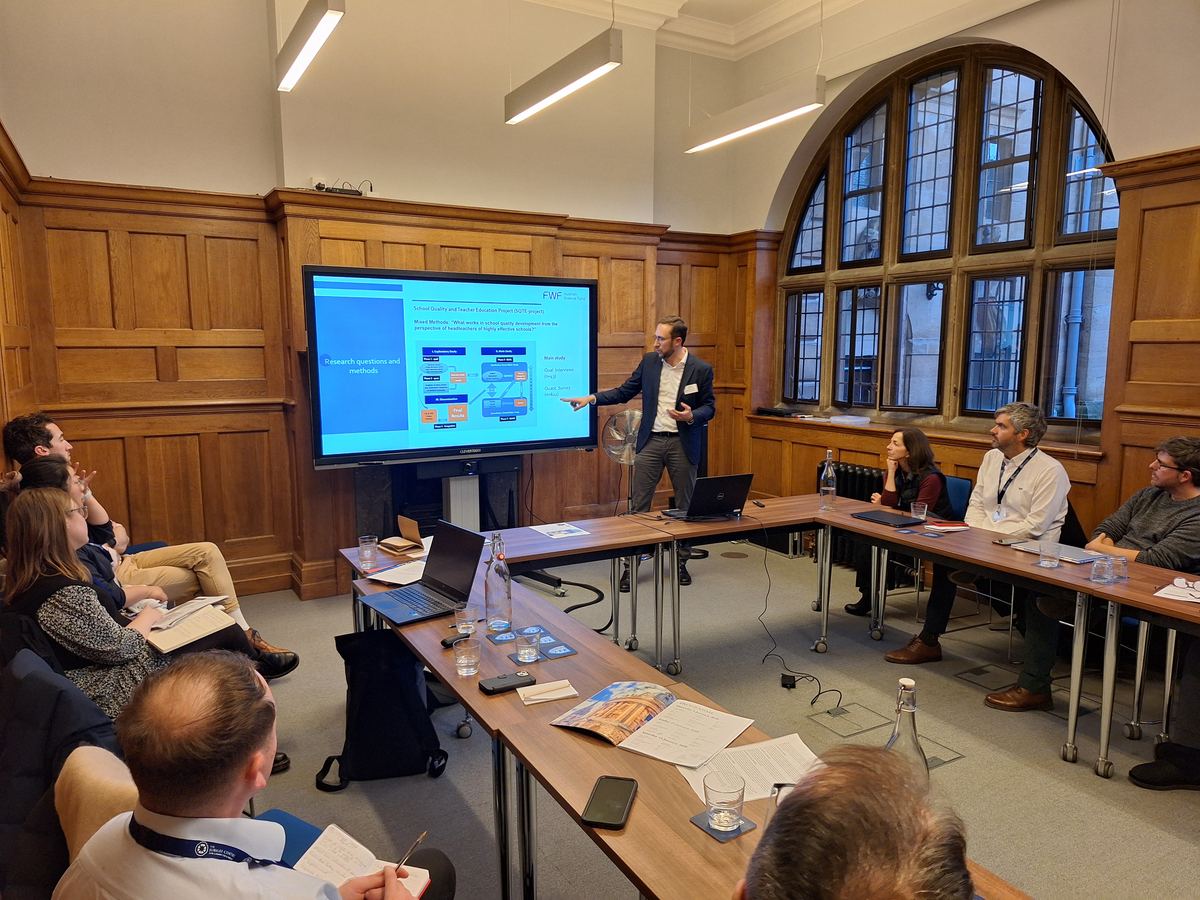
Since the early 2000s, the attainment of pupils from disadvantaged families in London’s state schools has risen markedly and rapidly — the ‘London Effect’. SQTE asked how the leaders of such schools achieve this. With colleagues at the University of Oxford, Roland Bernhard listened to them, tested what they said in a survey across England and carried the findings into Austria’s schools.
Led by Roland Bernhard · with Katharine Burn, Pam Sammons and John Furlong (University of Oxford) and Ulrike Greiner, Burkhard Gniewosz and Maria Tulis-Oswald (University of Salzburg) · funded by the Austrian Science Fund (FWF), P 31965-G
The question
Why London?
In a phenomenon known as the ‘London Effect’, the attainment of pupils from socio-economically disadvantaged families in London’s state schools has risen markedly and rapidly since the opening years of the millennium. Researchers regard it as a prime example that equity in education is achievable.
For Austria, the question was an obvious one. In 2016 the OECD’s review of school resources in Austria recommended paying more attention to the experience and views of school leaders and teachers — and learning from how other countries develop school quality, England among them. SQTE took up both suggestions. It asked how the leaders of highly effective, improving schools in England, above all in challenging circumstances in London, develop the quality of their schools — and what distinguishes them from schools of typical effectiveness.
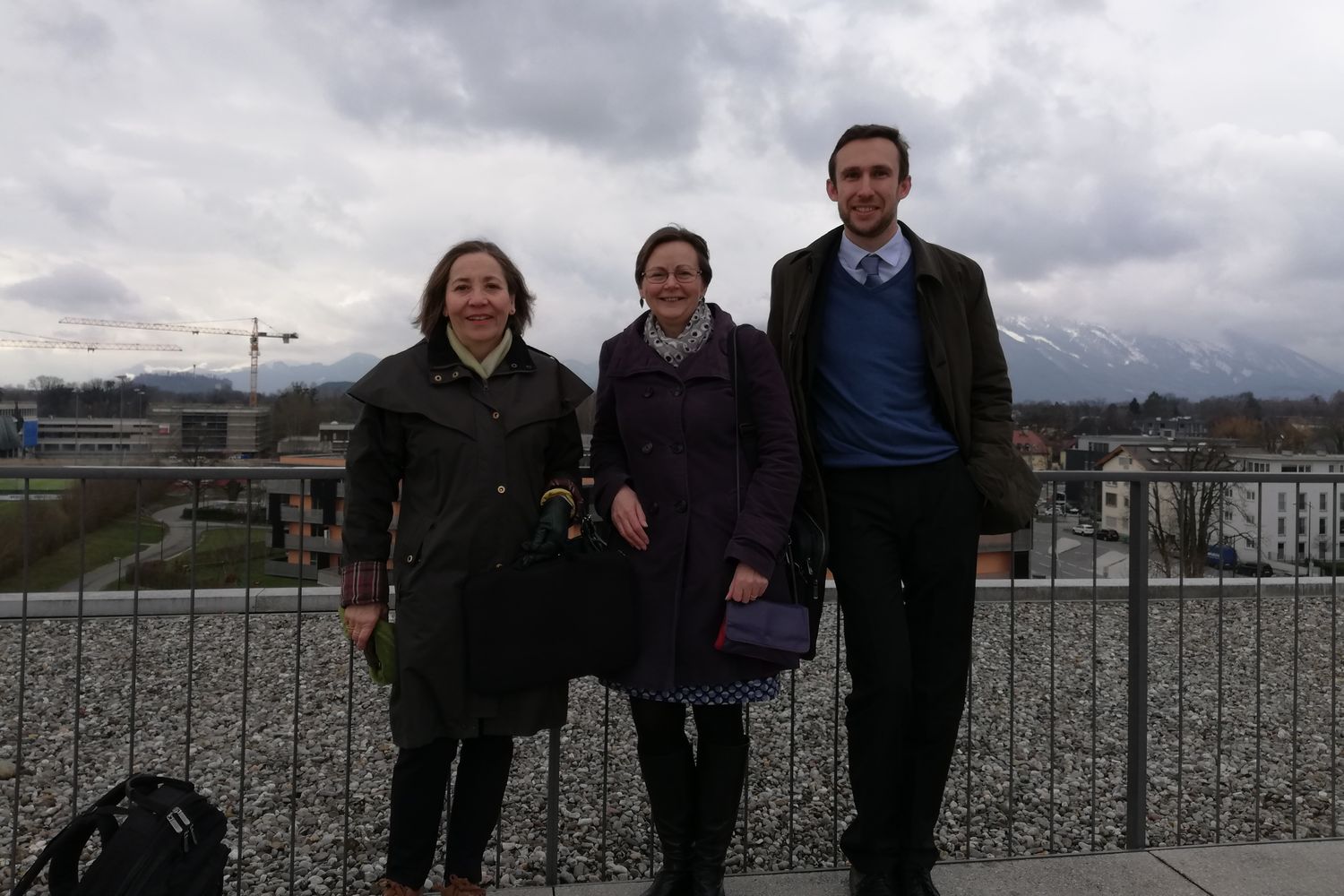
The project began in 2019 during Roland Bernhard’s Visiting Research Fellowship at the Department of Education of the University of Oxford, where Katharine Burn, Pam Sammons and John Furlong supported it. It continued at the University of Salzburg and, from 2021, at KPH Vienna/Krems (today KPH Vienna/Lower Austria), where Roland Bernhard was appointed professor in September 2021.

The design
Listen, test, transfer: three steps
SQTE used a mixed-methods design: what the leaders of highly effective schools reported in interviews was tested in a survey across England — and, from the start, discussed with Austrian school leaders and carried into their schools.
Interviews in highly effective schools
Face-to-face interviews with 43 school leaders and teachers with leadership responsibilities in highly effective schools in several English cities, with an emphasis on London. With ethical clearance from the University of Oxford — and completed by the end of February 2020, far ahead of schedule and just before the pandemic closed schools.
43 interviewsA survey across England
Qualitative research cannot show what sets highly effective schools apart from others. An online survey therefore asked school leaders and teachers across England about the approaches named in the interviews and related their answers to the progress pupils make at their schools (Progress 8). Almost 10,000 emails, sent in the middle of the pandemic, yielded 622 responses — more than the 400 planned. Christina Hasenhüttl collected the data during her Master’s studies at Oxford.
622 responsesInto Austria’s schools
Focus groups with 40 Austrian school leaders on the new quality management system, eight recommendations for the school system, in-service courses built on the findings — and the EULEAD Summerschool, founded in 2021 together with the project’s critical friends, the SQTE School Quality Network.
40 school leaders · 8 recommendations
Findings
What highly effective schools do differently
In the interviews, school leaders traced the success of their schools to a small set of approaches. The survey then showed which of them really set highly effective schools apart from schools of typical effectiveness.
What the leaders said
What the survey confirmed
Teaching comes first
Leaders of highly effective schools place greater emphasis on pedagogical leadership and concentrate more strongly on improving the quality of teaching. Pupils make greater progress in schools where leaders and teachers perceive a stronger emphasis on the quality of teaching.
Bernhard, McDermott, Hasenhüttl, Burn & Sammons (2024)
Colleagues learn from colleagues
In highly effective schools, teachers visit each other’s lessons more often to give one another feedback. The more often peer observation takes place, the greater the progress pupils make.
Bernhard, McDermott, Hasenhüttl, Burn & Sammons (2024)
Outstanding teachers keep growing
Leaders of highly effective schools are more strongly convinced that an outstanding teacher is marked by the willingness to keep developing and improving. Outstanding teachers are made, not born.
Bernhard, Tulis-Oswald & Hasenhüttl (2022)
Not every insight from the interviews held up as specific to highly effective schools: the importance of parental and community engagement and of research engagement, for example, did not emerge as a distinguishing feature in the survey.
Character
Not exam factories: character in highly effective schools
Do highly effective schools in disadvantaged areas simply drill their pupils for exams? A further analysis of the SQTE interviews — with 24 leaders of 11 highly effective schools, above all in London and in the designated Opportunity Areas — tells a different story. No one in the sample held that schools are not responsible for educating their pupils’ character.
- Unanimous. All interviewees emphasised the importance of character development in school.
- Resilience first. The performance virtue of resilience dominated the interviews; among the moral virtues, integrity was mentioned frequently.
- Caught more than taught. Character, the leaders believe, is passed on above all through the example of leaders and teachers, through relationships, and through consistency, routines and behaviour management — a friendly environment with very high expectations of behaviour and achievement.
- Sought through aspiration. The schools foster intrinsic motivation and raise pupils’ aspirations; explicit reflection on character, by contrast, was hardly present — with two exceptions.
The same combination — an uncompromising focus on teaching and the deliberate cultivation of character — guides the Kompass School of Character Favoriten, Vienna, which Roland Bernhard accompanies scientifically.
Source: Bernhard, R. (2025). School leadership and character: Tackling a global education challenge in highly effective and disadvantaged English schools. 13th Annual Conference of the Jubilee Centre for Character and Virtues, Oriel College, Oxford. Paper (PDF) →
“So, if you are not developing character education, you are just becoming an exam factory, and you will have anarchy, really.”
One school’s story
From ‘Inadequate’ to one of England’s ten most effective state schools
One interview stands for many. Before its head teacher arrived, a London secondary school had been rated ‘Inadequate’ by the inspectorate Ofsted. Within a few years, its Progress 8 score — the progress its pupils make compared with pupils of similar prior attainment — ranked it among England’s ten most effective state schools. What had he done?
- Leading by example. All senior leaders, the head included, teach classes a few hours a week — to know the school from the inside and to lend their decisions credibility.
- Building on the best. He identified the teachers whose pupils made the most progress and, with their agreement, reduced their teaching load to about 14 lessons a week. As ‘lead practitioners’ they joined the leadership team and took charge of internal training and peer observation.
- Observation as development. A great many lesson observations, learning walks and ‘book looks’ — “in the right way, as a CPD […], not in terms of accountability”.
- Character in leadership. Resilience, humility, clarity, positivity and calm — qualities he expects of leaders and teachers alike — and the ability to apologise for one’s own mistakes. He walked around the school every day, to see and to be seen.
- Relationships. Teachers should know their pupils’ names and meet them with humility and positivity. Being a good teacher, he said, is first and foremost about being a good listener.
“In every school there’s some fabulous teachers in this country and I set up what is called a Lead Practitioner Team, so people that are really good teachers […] [can] drive the improvement within the school.”
At another London school, leaders described how teachers stopped raising their voices at pupils — and how all teachers began to stand outside the building every morning to welcome them to school “with a smile”.
Source: Bernhard, R. (2024). SQTE Research Papers 02/2024. Read the full case →
Austria
What Austria can learn
“Not really the best use of my training”
From the SQTE focus groups with Austrian school leaders (title of the report)
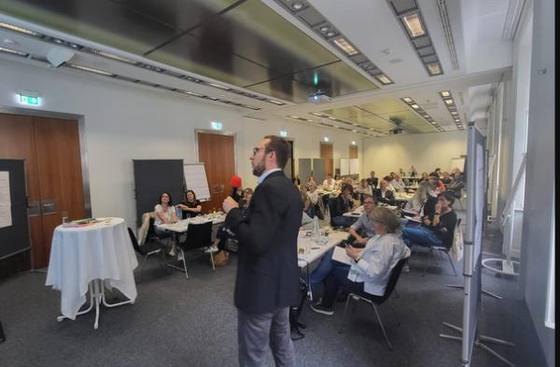
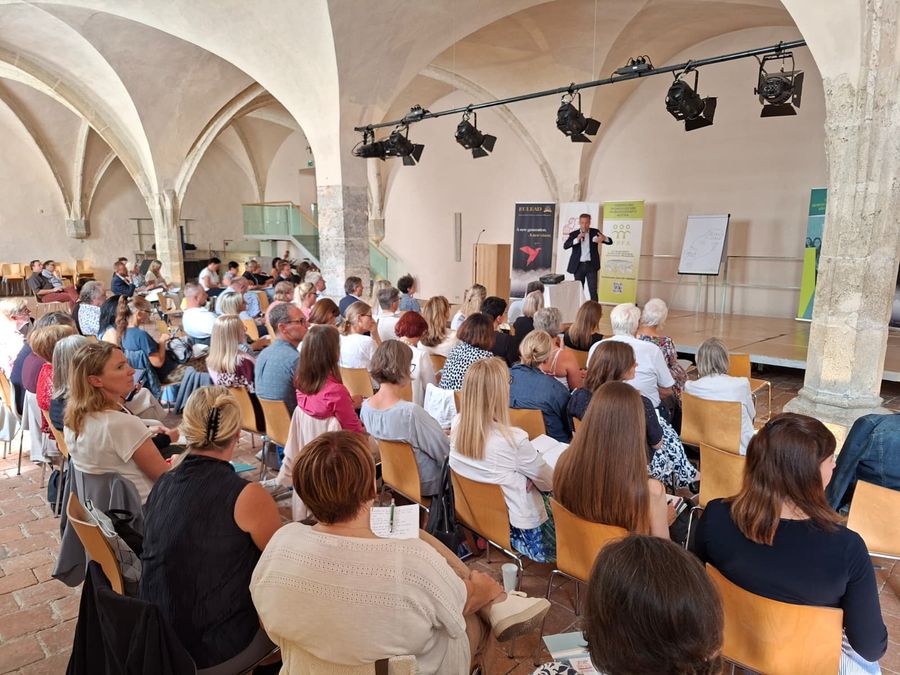
At the end of August 2021, at a conference on school quality hosted by KPH Vienna/Krems and co-funded by the FWF, the project held seven focus groups with 40 school leaders from six Austrian federal provinces about the new quality management system (QMS). Together they could look back on around 1,000 years of experience in Austrian schools. Their message was clear: so much of their time goes into administration that too little remains for improving teaching.
The open letter to the Education Minister that followed on 6 April 2022 asked for administrative support staff, a middle-management layer, more attractive headships and more autonomy for school leaders. ORF’s main evening news, Ö1 and the major daily newspapers reported on it.
Open letter and report (English, 2024) →German original (2022) →
Eight recommendations for Austria’s school system
From the findings, Roland Bernhard drew eight recommendations for the further development of the Austrian school system.
Teaching at the core
Make improving teaching and learning the heart of school development: learning walks, open classrooms, peer observation.
Middle leadership, less bureaucracy
A contingent of hours for middle management in every school, for instance on the Hamburg model — and far less administration for leaders and teachers.
A fair progress measure
Modelled on England’s Progress 8: showing how far a school moves its pupils forward, so that schools in challenging circumstances are judged more fairly.
Share what works
Identify and spread best practice in pedagogical leadership — with an annual conference and regional workshops.
An Austrian City Challenge
Inspired by the London Challenge: strong schools as role models that support other schools in disadvantaged neighbourhoods.
Prestige for the profession
A ‘Teachers’ Day’ and a campaign that tells the stories of people inspired and shaped by their teachers.
A ‘what works’ foundation
Modelled on England’s Education Endowment Foundation: translating research into practical guidance for schools.
Classroom management and teaching techniques
A stronger place in teacher education, with a balanced view of direct instruction and constructivist approaches — disadvantaged learners in particular benefit from structured teaching.
Several of these ideas point in the same direction as Austria’s new quality framework for schools (QRS), which asks school leaders to put the quality of teaching and pupils’ learning outcomes at the centre of school development and to make use of lesson observation.
Impact
From research into schools
SQTE found an echo in Austria’s media — 40 reports, from ZIB 1 to the daily papers. More importantly, its findings reached the people who shape schools every day — school leaders, teachers, school quality managers and those who train them.
Figures as reported in the project’s final summary (KPH Vienna/Lower Austria); the summary also lists 53 talks, three conferences and four summer schools for school leaders (2021–2024).
What continues
Founded in 2021 with the project’s critical friends and held every summer since — in 2026 with more than 100 leaders at Lilienfeld Abbey. More →
A practical template for school leaders, developed with a state-prize-winning school on the basis of SQTE (Bernhard, Marton & Pfingstner, 2024). Full text →
Five SQTE Classroom Management Snapshots and in-service courses developed with Teach For Austria (Bernhard, Cadman, Hohengasser & Marton, 2025). Snapshots →
At the request of the Welsh Government, Roland Bernhard reviewed the criteria for accrediting initial teacher education in Wales, drawing on SQTE. gov.wales (PDF) →
A new proof-point school that joins excellent teaching and character education — with accompanying research from 2026. Project page →
Leadership tools that turn such findings into practice for school leaders — among them a research brief on what distinguishes highly effective from average schools, with recommendations and reflection questions. To the brief →
In the media — a selection
Headlines translated from German. The complete list is in the press review.
Team
The people behind SQTE
Principal partners · University of Oxford
- Katharine Burn
- John Furlong
- Pam Sammons
Principal partners · University of Salzburg
- Ulrike Greiner
- Burkhard Gniewosz
- Maria Tulis-Oswald
Research team
- Harald von BeringeKiel University
- Karolina DornakKPH Vienna/Krems
- Dominik HarnischUniversity of Salzburg
- Christina HasenhüttlUniversity of Oxford
- Pierre LucienUniversity of Oxford
- Tiarnach McDermottUniversity of Oxford
- Anna MilianKPH Vienna/Krems
- Sarah-Noelle StarchKPH Vienna/Krems
- Melanie ZehetmayerUniversity of Vienna
Dominik Harnisch received the 2020 research award of the Salzburg Chamber of Labour (category “Chancengleich ins Leben starten”) for his Master’s thesis in the project; Christina Hasenhüttl wrote her Master’s dissertation at Oxford within SQTE; Tiarnach McDermott and Pierre Lucien worked on the project alongside their doctorates at Oxford.
Further project staff
- Diana Altmann
- Thomas Frühwirth
- Johannes Gasser
- Kirsa Köber
- Aron Marton
- Martin Sturc
And a large group of critical friends: the school leaders of the SQTE School Quality Network, who discussed the findings and carried them into their schools.
Publications
Selected publications from the project
Journal articles and book chapters
SQTE Research Papers (open access)
Conference papers
For practice and policy
In one sentence
“The key thing […] is the focus that you generate in teaching and learning, that’s the focus.”A London head teacher interviewed for SQTE (Bernhard, 2024)